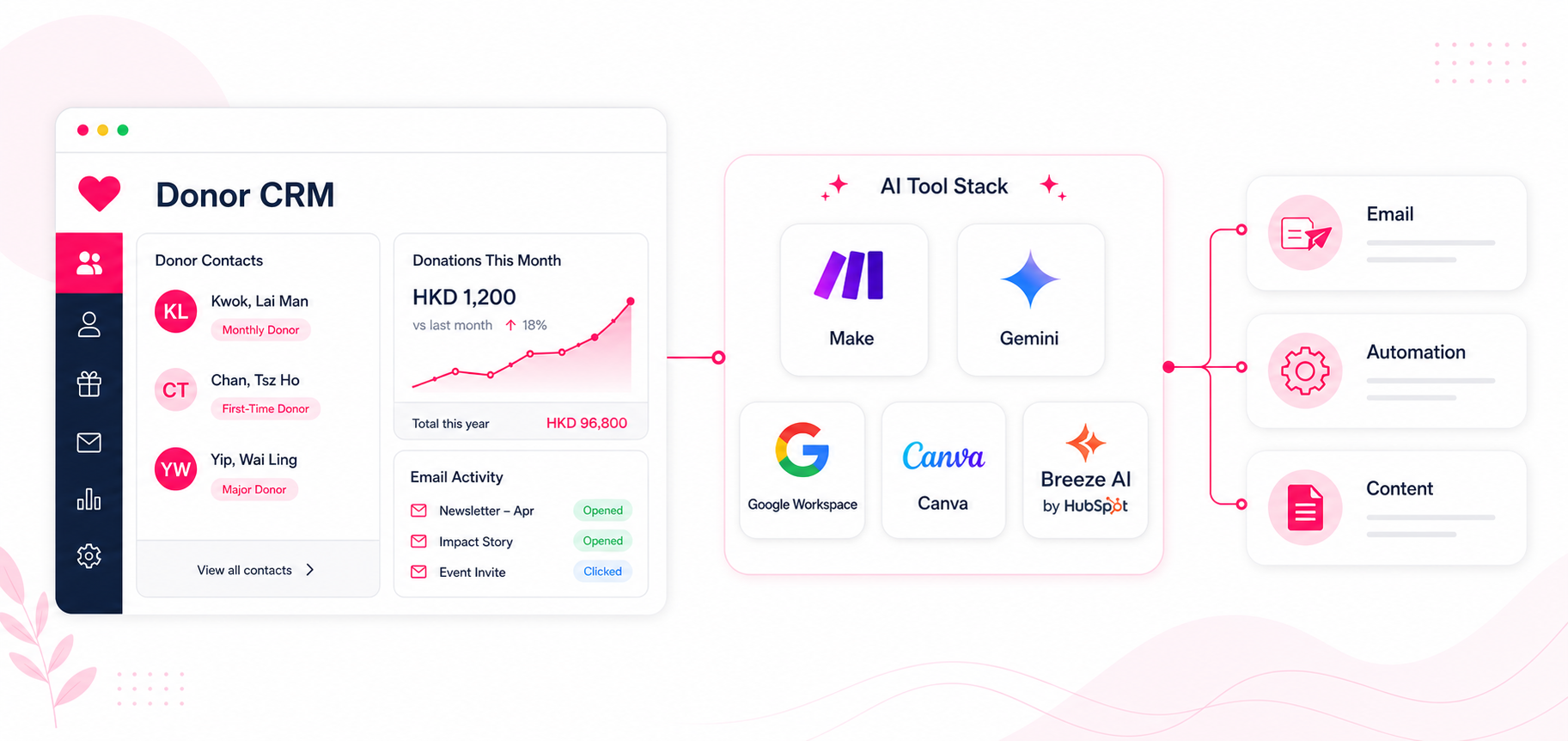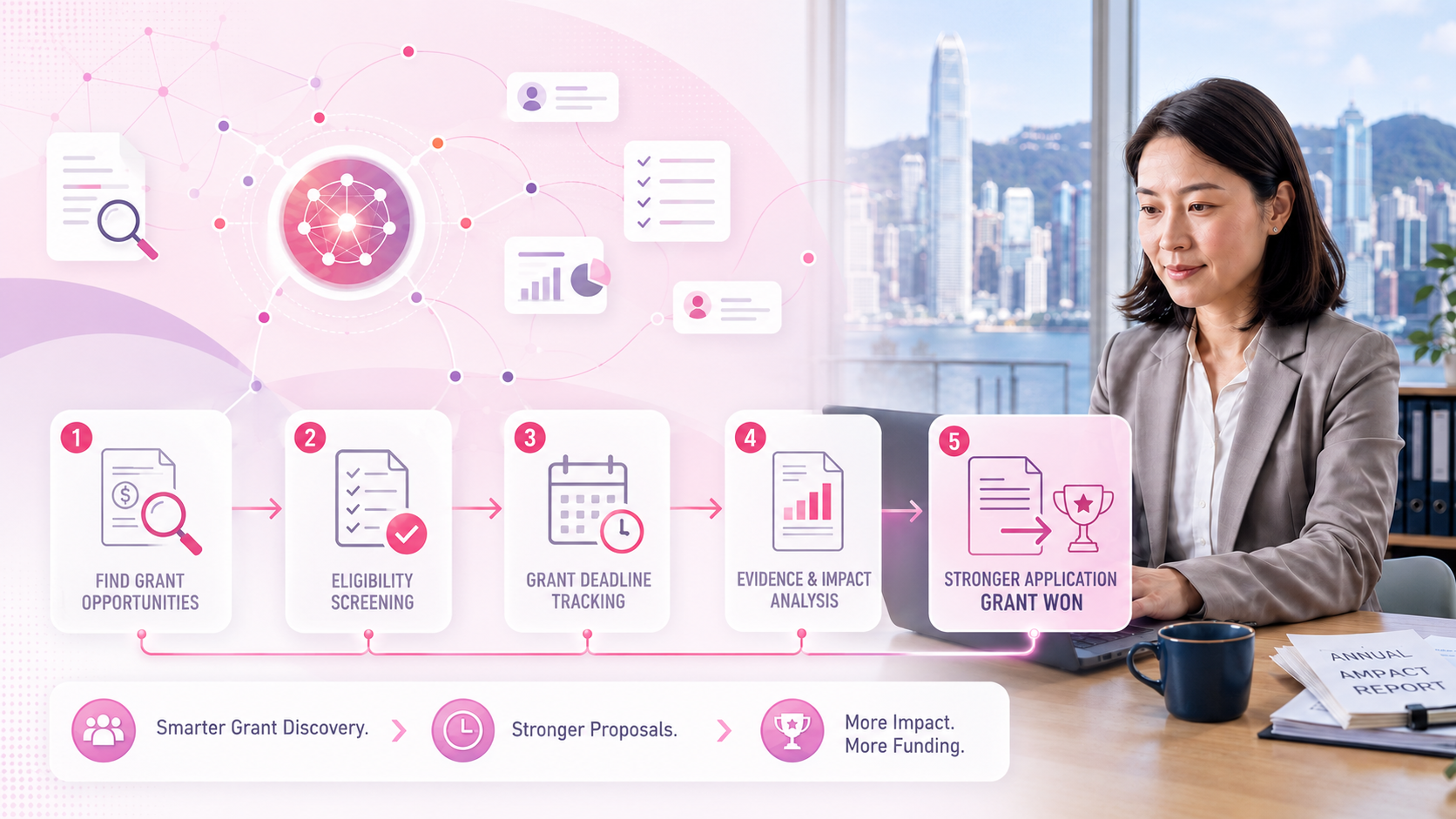
How to compare AI transformation services, overcome internal resistance, and build a practical AI roadmap for fundraising, donor management, and finance — without burning out your team.
In the fast-paced Hong Kong non-profit sector, staff members are often the ultimate "all-rounders." One moment you're reconciling donation accounts for a corporate sponsor, the next you're coordinating a large-scale event like Flag Day or a youth workshop—all while managing an endless stream of emails.
In the competitive landscape of Hong Kong philanthropy, acquiring a new donor is five times more expensive than retaining an existing one. Yet, many local NGOs are operating with a "leaky bucket" syndrome—focusing all their energy on the next big gala or fundraising drive, while silent donor churn erodes their foundation.
In 2026, "Donor Retention" isn't just a metric; it's the key to sustainability. If you don't have a system to identify a "slipping" donor before they stop giving, you're leaving your mission's future to chance.
Every April, Hong Kong’s NGO sector enters a period of predictable chaos. As the March 31st fiscal year-end passes, the countdown begins for "Receipting Season." For finance teams and fundraising managers, this means manually reconciling thousands of bank transfers, PayMe transactions, and credit card gifts into Section 88 compliant tax receipts.
If your team is still manually mail-merging PDFs and cross-checking spreadsheets, you aren’t just losing time—you’re risking donor retention and data accuracy.
For many mid-range NGOs in Hong Kong, "Digital Transformation" often sounds like a luxury. But in 2026, it has become a matter of legal and operational survival.
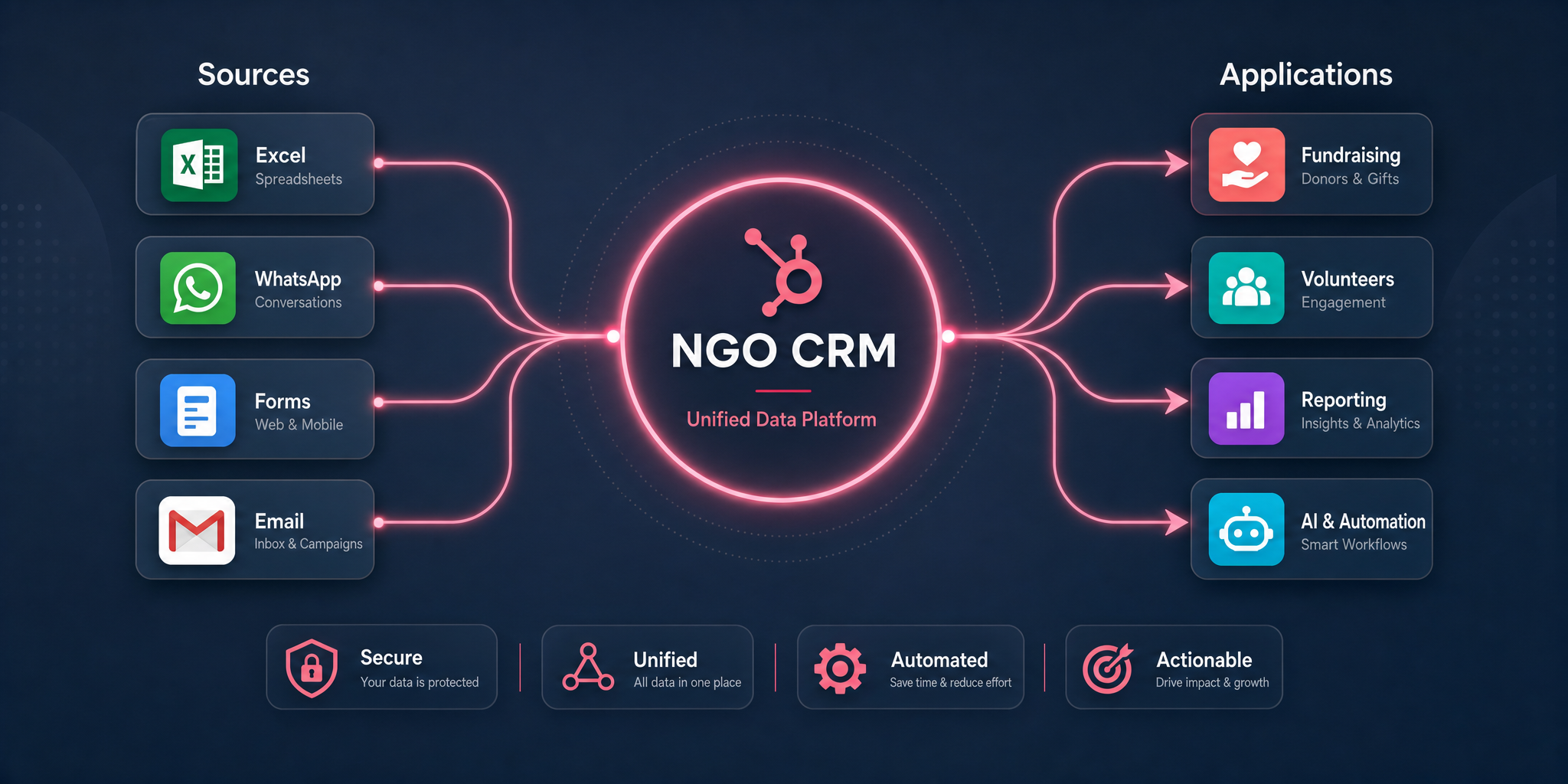
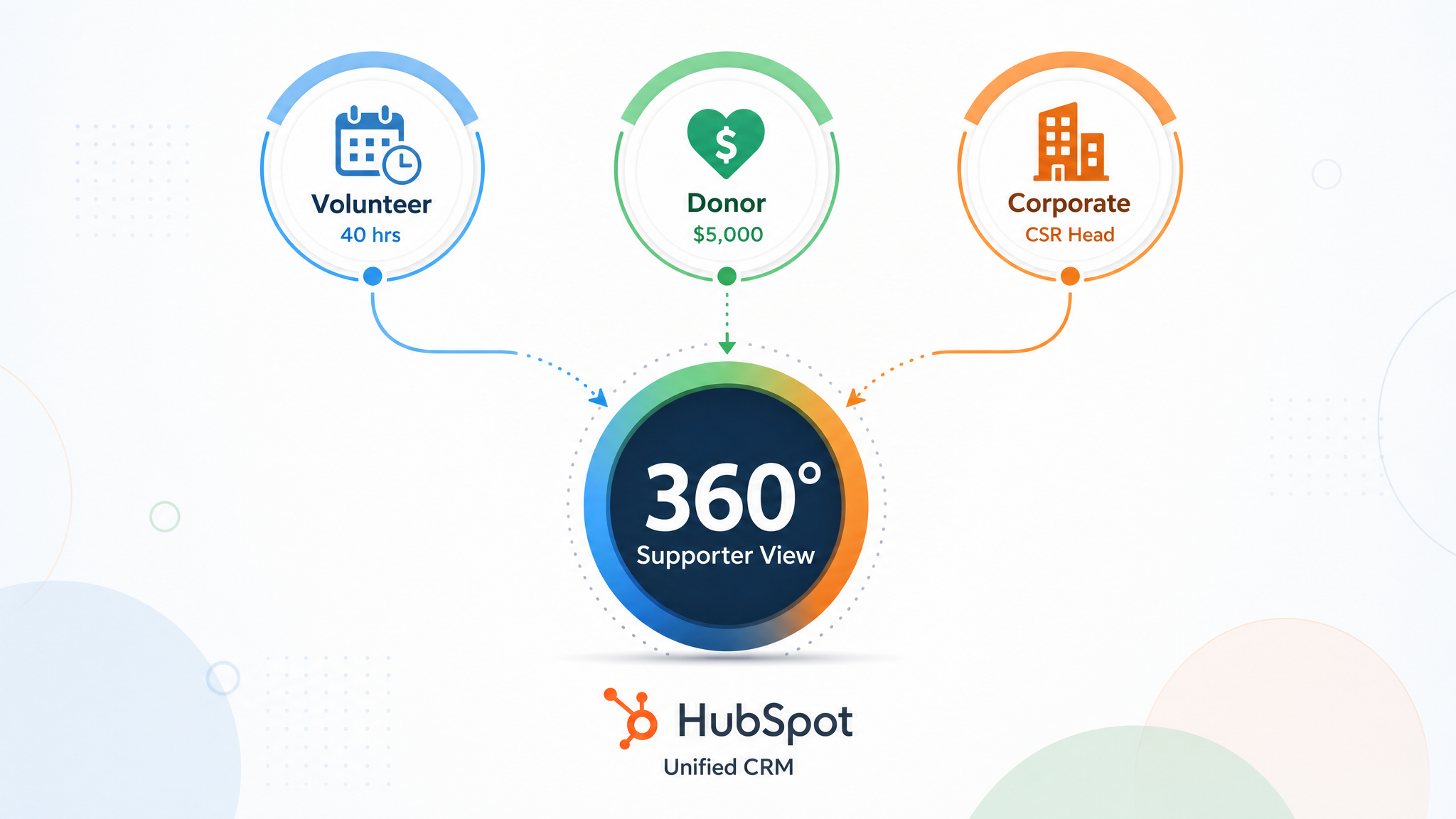
As a HubSpot Platinum Partnerbased in HK, we’ve seen brilliant non-profit teams hampered by fragmented data. Whether you are managing donor lists in legacy spreadsheets or coordinating volunteers via scattered WhatsApp groups, "the old way" is now a major compliance risk.
Here’s why your NGO’s digital architecture is your strongest shield—or your biggest weakness.
In the fast-paced Hong Kong non-profit sector, staff members are often the ultimate "all-rounders." One moment you're reconciling donation accounts for a corporate sponsor, the next you're coordinating a large-scale event like Flag Day or a youth workshop—all while managing an endless stream of emails.
We're all ears.
1/F, MIT Node, 78 Tat Chee Ave,
Kowloon Tong, Hong Kong