When we talk to non-profit leaders in Hong Kong, we often uncover a silent operational roadblock:
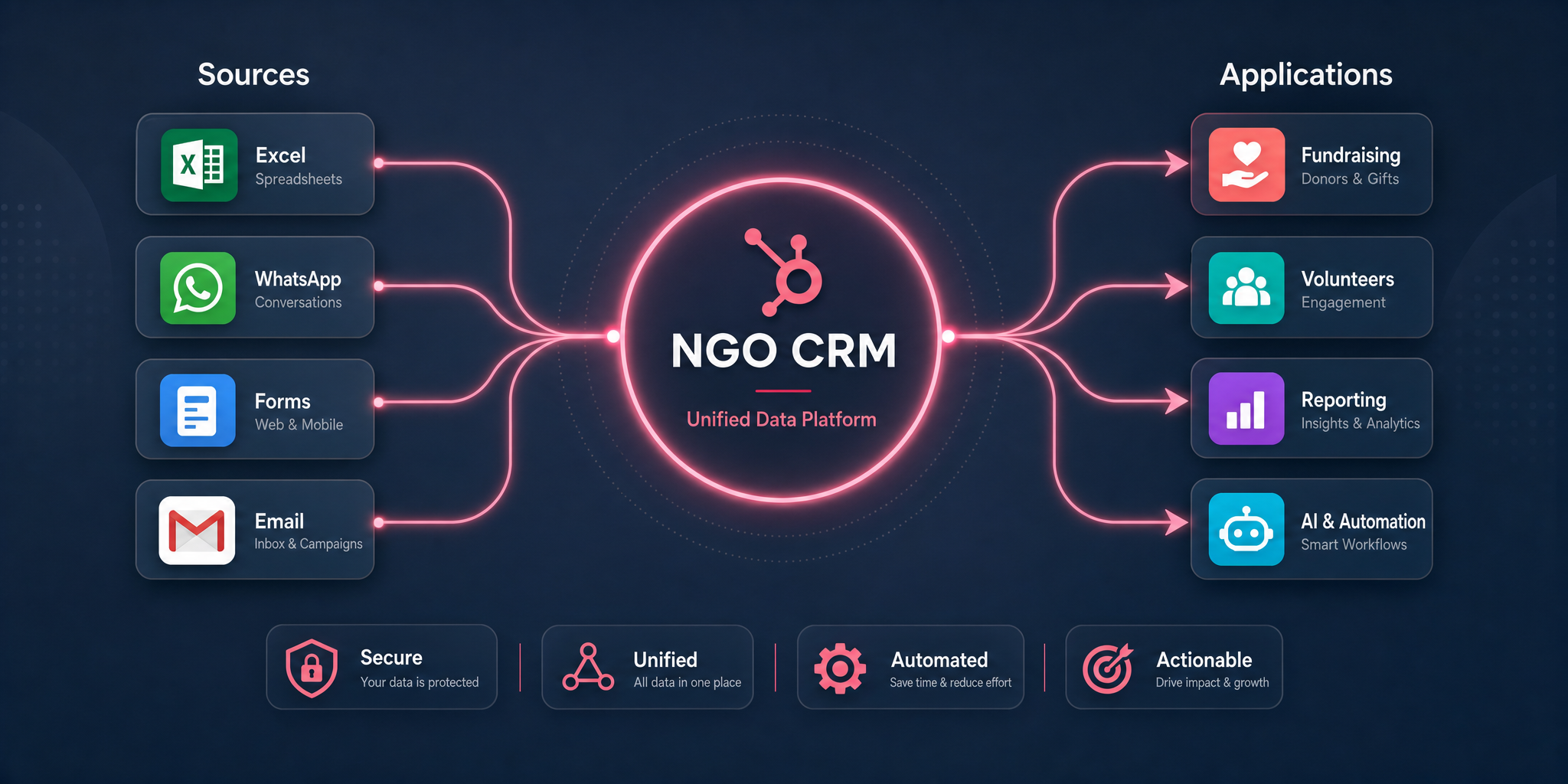
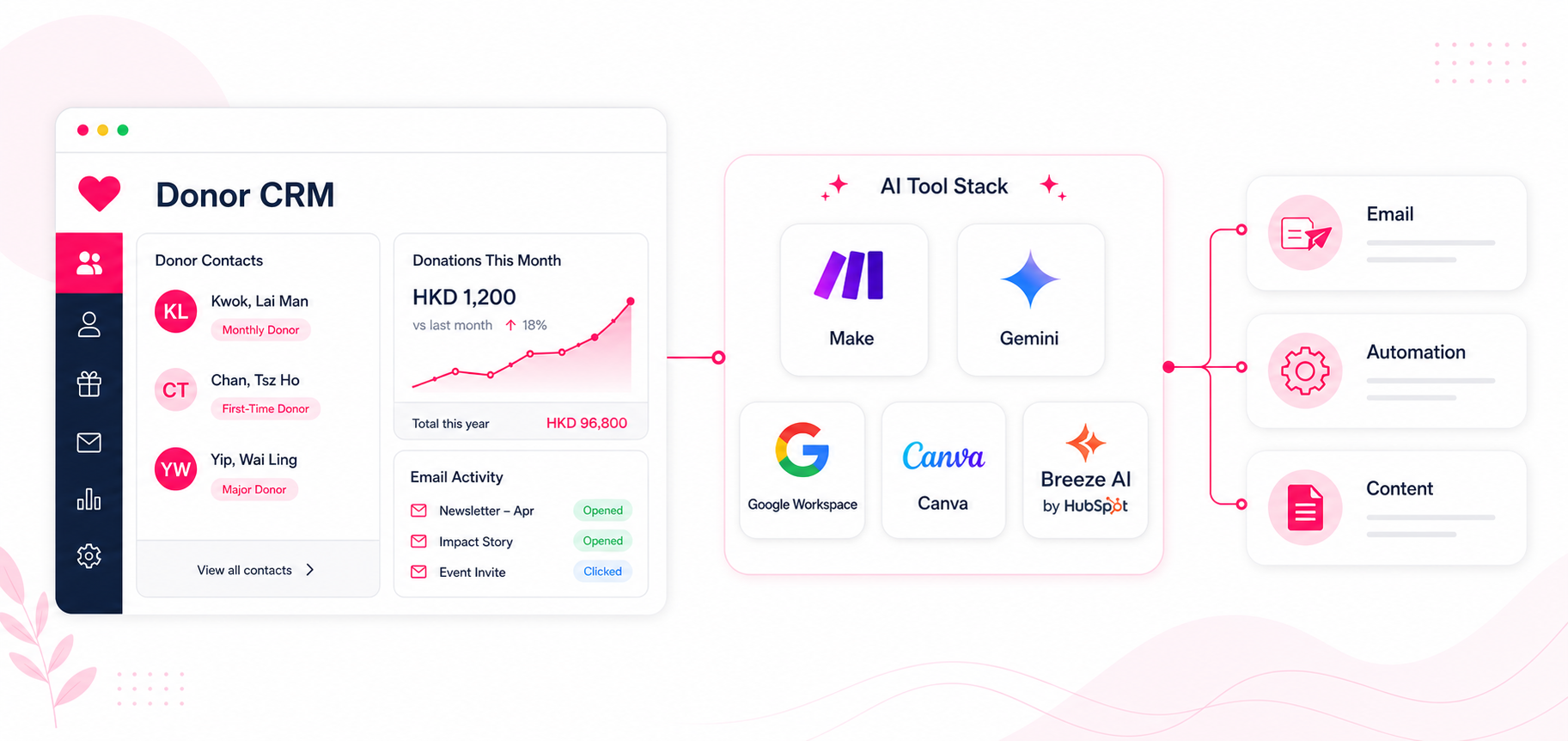
the supporter relationship is fractured across separate spreadsheets.
When we talk to non-profit leaders in Hong Kong, we often uncover a silent operational roadblock:
the supporter relationship is fractured across separate spreadsheets.
The true value of modern technology isn't found in abstract tech buzzwords—it’s found in the hours of manual administrative work you can save your team every single week.
For non-profits in Hong Kong, managing data across fragmented entry points (Eventbrite links, paper sign-up sheets, WhatsApp messages) creates a constant operational bottleneck.
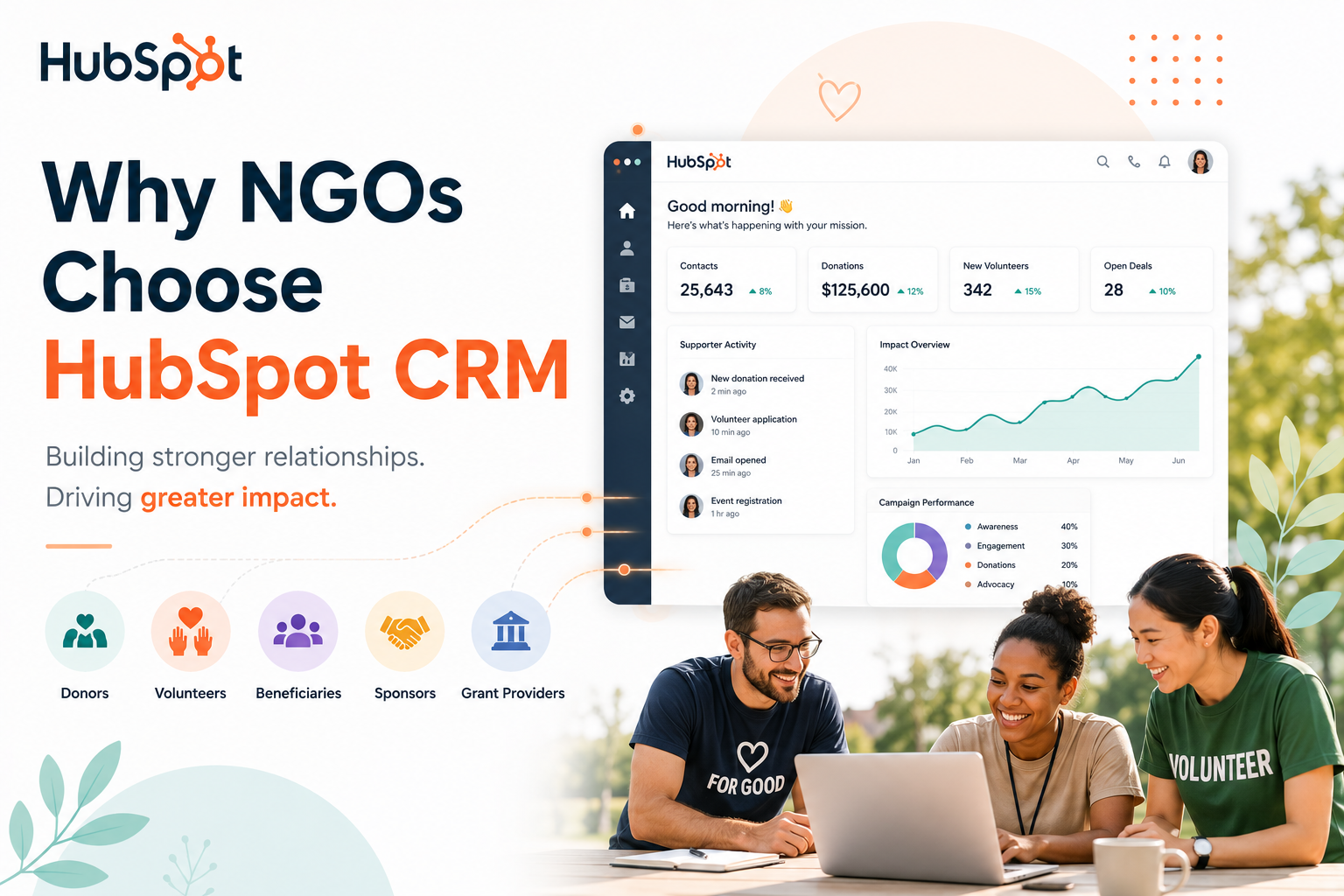
In the modern nonprofit sector, building trust and maintaining strong relationships with donors, volunteers, and beneficiaries is everything. However, many NGOs struggle with "cobbled" systems—using one tool for emails, another for donor databases, and yet another for website management.
How to compare AI transformation services, overcome internal resistance, and build a practical AI roadmap for fundraising, donor management, and finance — without burning out your team.
In the fast-paced Hong Kong non-profit sector, staff members are often the ultimate "all-rounders." One moment you're reconciling donation accounts for a corporate sponsor, the next you're coordinating a large-scale event like Flag Day or a youth workshop—all while managing an endless stream of emails.
In the competitive landscape of Hong Kong philanthropy, acquiring a new donor isfive times more expensive than retaining an existing one. Yet, many local NGOs are operating with a "leaky bucket" syndrome—focusing all their energy on the next big gala or fundraising drive, while silent donor churn erodes their foundation.
Every April, Hong Kong’s NGO sector enters a period of predictable chaos. As the March 31st fiscal year-end passes, the countdown begins for "Receipting Season." For finance teams and fundraising managers, this means manually reconciling thousands of bank transfers, PayMe transactions, and credit card gifts into Section 88 compliant tax receipts.
For many mid-range NGOs in Hong Kong, "Digital Transformation" often sounds like a luxury. But in 2026, it has become a matter of legal and operational survival.
In the fast-paced Hong Kong non-profit sector, staff members are often the ultimate "all-rounders." One moment you're reconciling donation accounts for a corporate sponsor, the next you're coordinating a large-scale event like Flag Day or a youth workshop—all while managing an endless stream of emails.
When HubSpot launched the Lead Object, I was skeptical, seeing it as unnecessary complexity on top of
Contacts and Deals—our pipelines were already cluttered, but they worked. After hands-on testing together with some of our real clients’ adoption, building workflows, and measuring outcomes, I flipped completely.
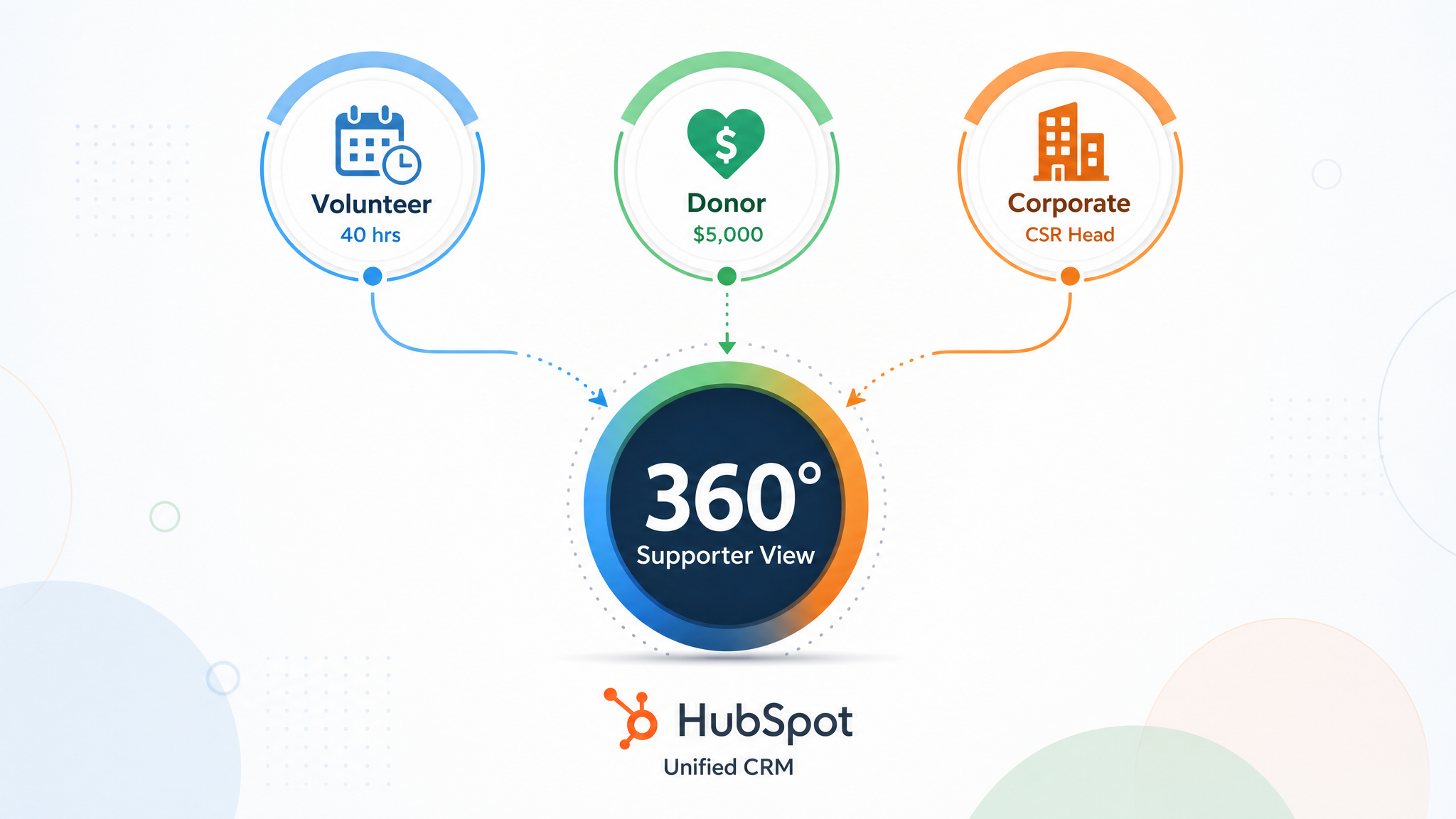
In the age of customer-centric business, a unified CRM platform is indispensable for companies looking to scale and provide a superior customer experience. A platform that is crafted, not cobbled, offers a seamless solution that brings together all the necessary tools to foster growth and ensure customer satisfaction.
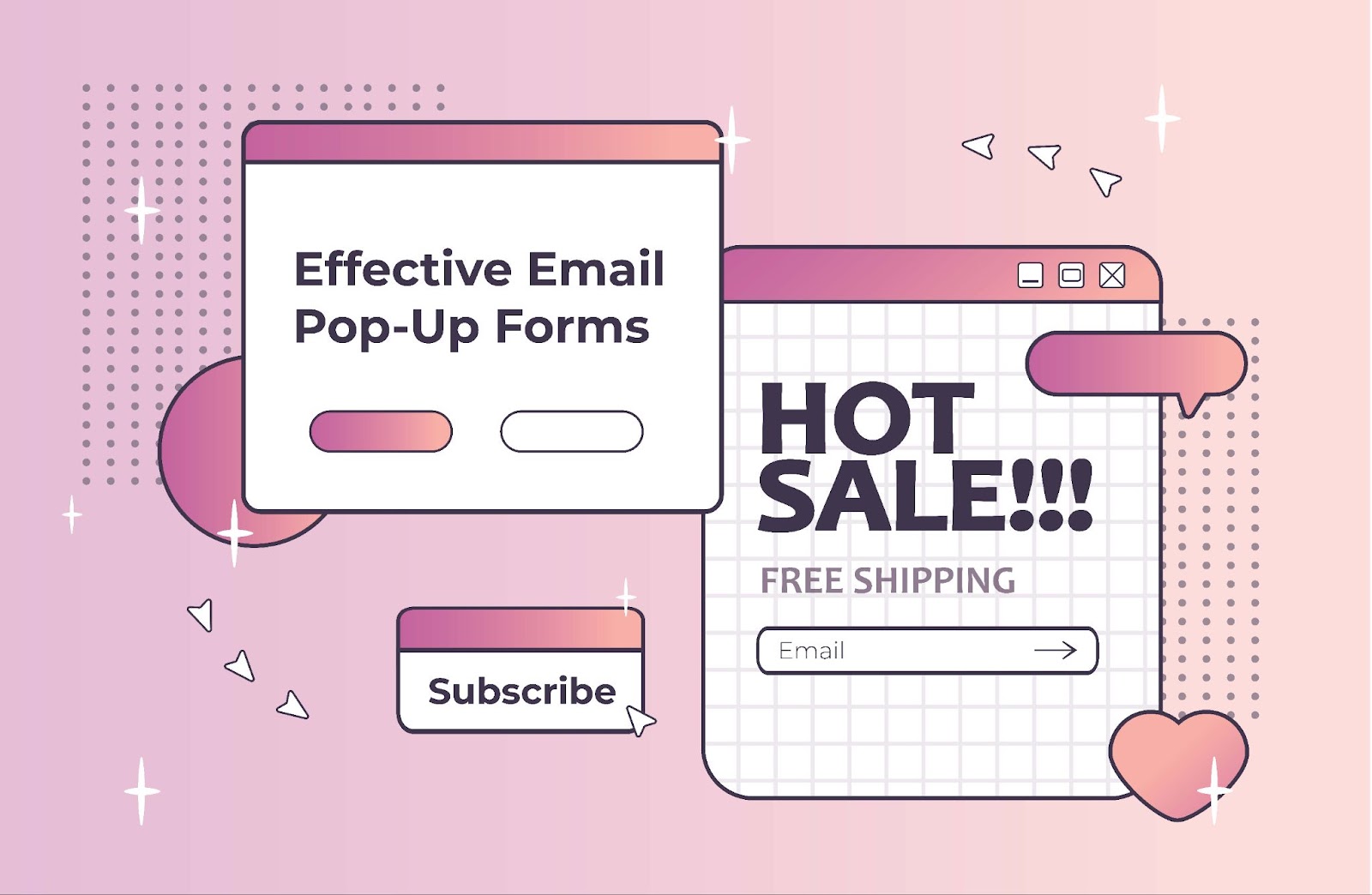
Let's face it—those unexpected email subscription pop-up forms can be a real thorn in the browsing experience. As marketers, we've all grappled with the dilemma of whether to embrace these seemingly disruptive elements on our websites. However, there's a twist: while they might seem annoying, pop-ups wield incredible power, particularly when dealing with substantial web traffic. They grant us the chance to convert casual visitors into long-term subscribers, nurturing them over time.
In this article, we're diving headfirst into the realm of email pop-up forms. We'll explore their multifaceted purposes and equip you with the strategies needed to transform them from irritants into invaluable assets. Prepare to learn how to engage your audience without compromising their experience as we unravel the art of effective email pop-ups.
We're all ears.
1/F, MIT Node, 78 Tat Chee Ave,
Kowloon Tong, Hong Kong