

Here is a question worth sitting with for a moment.
When a CSR manager at a Hong Kong corporation ask AI— "Which Hong Kong NGOs are working on youth mental health?" — does your organisation appear in the answer?
If you don't know, that's the problem.
Donor behaviour has changed faster than most NGOs have had time to respond. The way people research causes, evaluate organisations, and decide where to give has quietly but fundamentally shifted. And the NGOs that understand this shift early will have a significant advantage over those that don't.
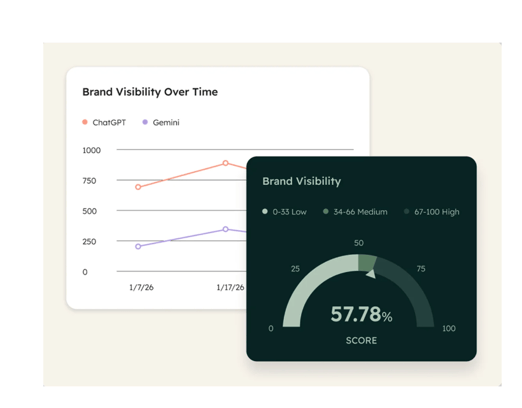
This is what HubSpot's Answer Engine Optimisation — AEO — is built to address. And in our experience working with Hong Kong NGOs, it is the most underused and most misunderstood feature available to them today.
The Way Donors Research Has Changed Forever
For years, the playbook was simple. Rank well on Google. Drive traffic to your website. Convert visitors into donors.
That playbook is breaking down.
Between January and October 2025, organic search traffic to nonprofit websites fell 35% compared to the same period the year before. The primary reason? Donors are no longer clicking through to websites in the same way. They are getting their answers directly from AI tools — Microsoft Copilot, Google Gemini, and DeepSeek — without ever visiting a single page.
At the same time, AI-driven traffic to nonprofit websites grew by 1,000% year-over-year. The behaviour is shifting rapidly. People are still researching. They are just doing it differently.
A 2025 study found that 68% of generative AI users are actively using these tools to explore and survey the landscape on topics and organisations before making decisions. For donors and CSR managers, this means AI has become the first stop in their research journey — not Google, not a charity directory, not a word-of-mouth recommendation.
They open Copilot. They ask a question. They trust the answer.
The Cautious Donor
Donors today are more discerning than any previous generation. Before committing to an organisation, they want to understand the impact, evaluate the leadership, assess the credibility, and verify the cause alignment. They read annual reports. They look at governance. They compare organisations side by side.
Research from Fundraising.AI shows that donor familiarity with AI surged significantly from 2024 to 2025 — the percentage of donors who described themselves as "very familiar" with AI jumped by 10 percentage points in a single year. And 93% of donors rated transparency as either "very important" or "somewhat important" when it comes to how nonprofits use AI.
This is a cohort of donors who are not only comfortable using AI to research charities — they expect the charities they support to be using AI themselves.
For CSR managers specifically, the bar is even higher. They are accountable to their own leadership for the partnerships they recommend. They research thoroughly, and increasingly that research begins with an AI query. If your NGO is not present in those AI-generated answers, you are not in the consideration set.
What AEO Actually Means for NGOs
Search Engine Optimisation — SEO — is about ranking higher in Google results so more people click through to your website.
Answer Engine Optimisation — AEO — is a different objective entirely. It is about being cited in the answers that AI engines generate when someone asks a question relevant to your cause.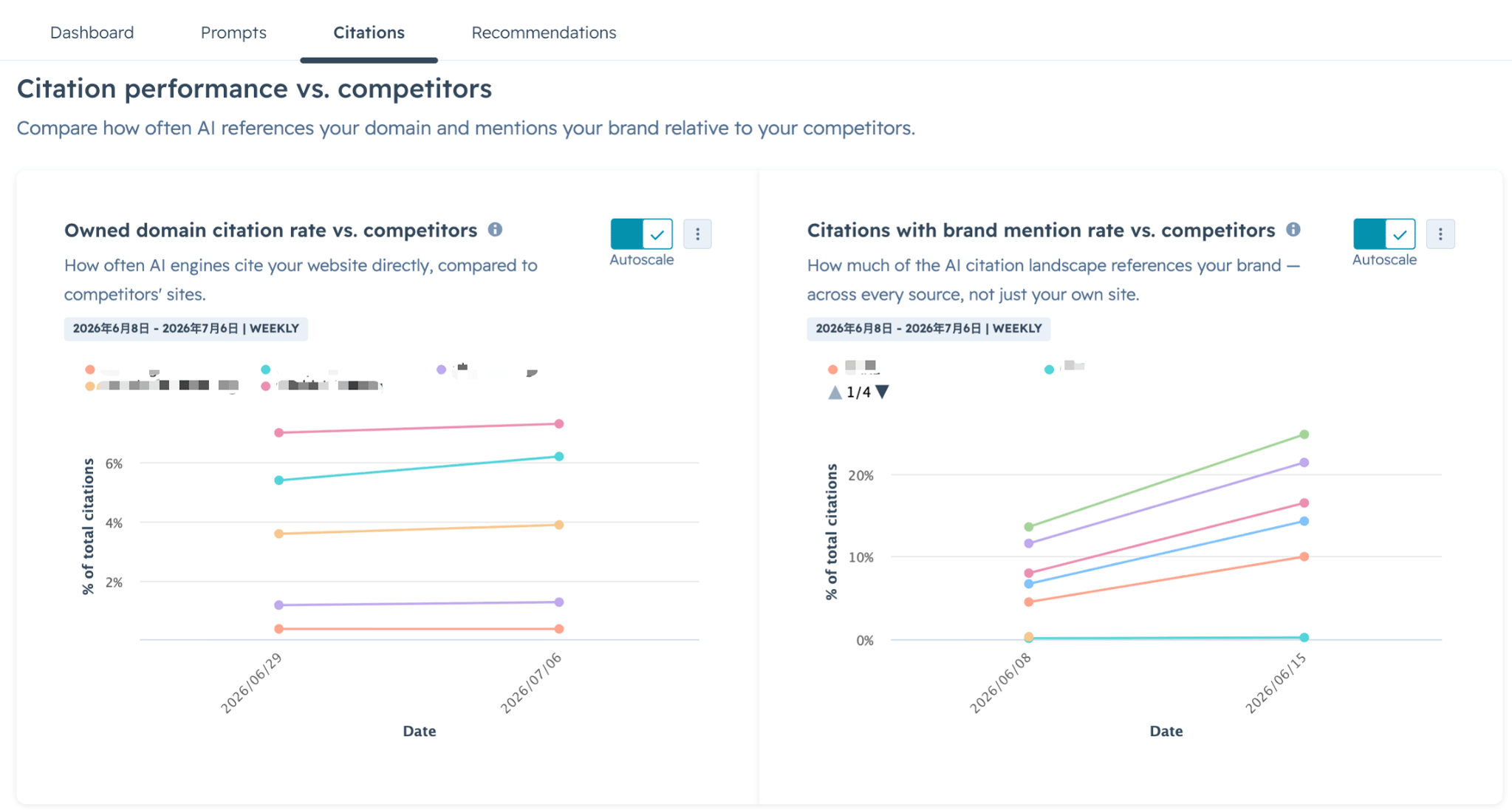
The distinction matters enormously.
When someone searches on Google, they see a list of results and choose where to click. Your website is one option among many.
When someone asks Copilot or Gemini a question, the AI synthesises an answer and presents it as a single, authoritative response — often citing two or three organisations by name. If you are not among them, you do not exist in that moment.
This is why the stakes for AEO are so high for NGOs. You are not competing for a position on page one. You are competing to be named at all.
The good news is that HubSpot has built AEO capability directly into its Marketing Hub and Content Hub — available across all plans, currently in Beta. It tracks how your organisation appears across Microsoft Copilot, Google Gemini, and DeepSeek — the three AI engines most relevant to Hong Kong users.
How HubSpot Measures Your AEO Score
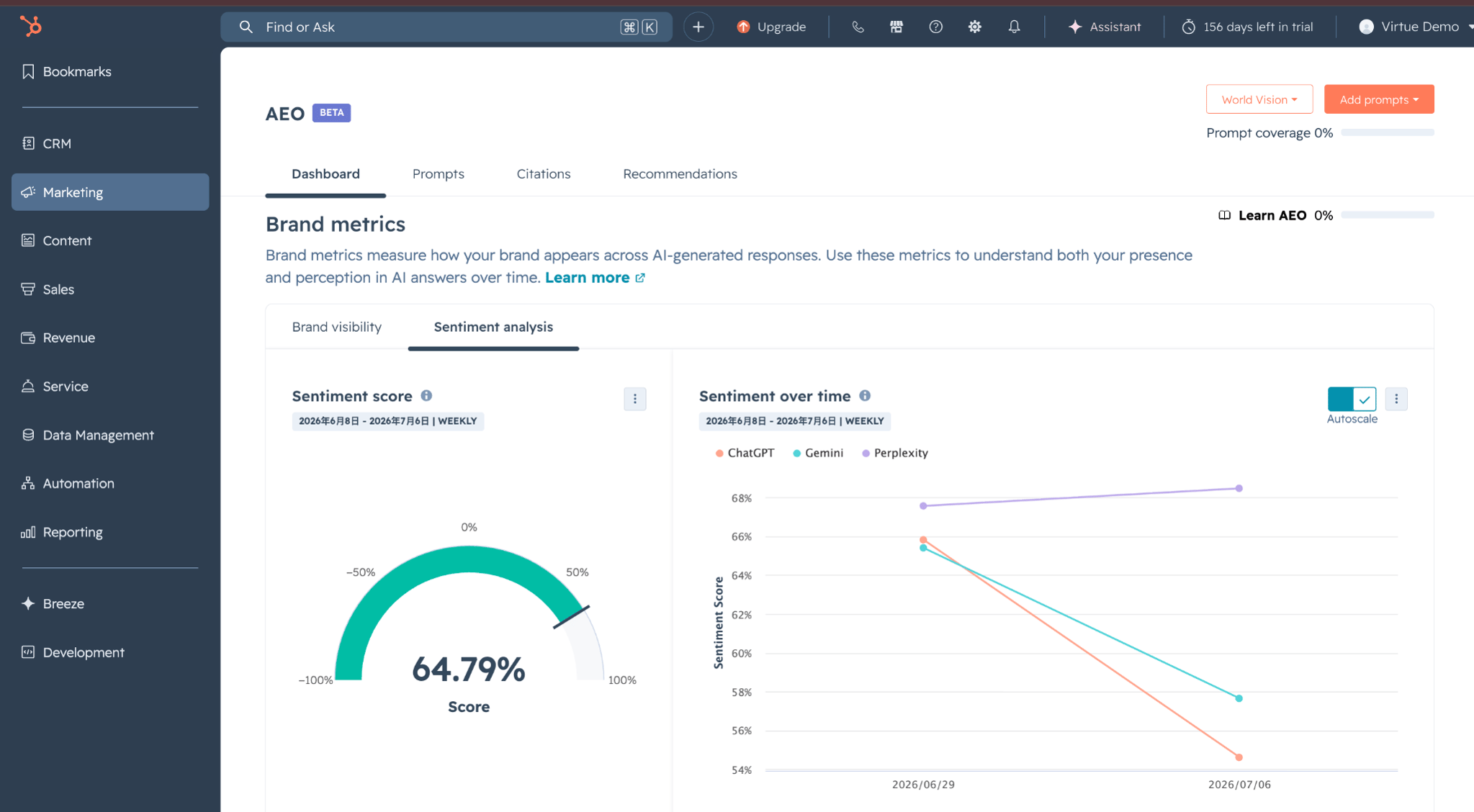
HubSpot's AEO tool evaluates your brand's AI visibility across five dimensions:
- Sentiment Analysis — 40 points
How does AI describe your organisation when it references you? Is the language positive, neutral, or absent? This is the highest-weighted dimension because tone shapes perception more than presence alone. - Presence Quality — 20 points
When AI does mention your NGO, how substantively does it discuss you? A passing mention is very different from a detailed, accurate description of your work and impact. - Brand Recognition — 20 points
How widely does AI recognise your organisation across different query types? Can it identify your programmes, your mission, your leadership, and your cause area accurately? - Share of Voice — 10 points
When someone asks about your cause area in Hong Kong, what proportion of AI responses include your organisation versus your peers? This is your competitive position in AI-generated answers. - Market Position — 10 points
How does AI categorise your organisation — as a leader, a challenger, or a niche player in your sector?
Together these five dimensions give you an overall AEO score out of 100. HubSpot's free AEO Grader at hubspot.com/aeo-grader runs the analysis in under three minutes and shows you exactly where you stand today.
Why Most HK NGOs Score Poorly — And What To Do About It
In our work with Hong Kong NGOs, we consistently see the same patterns when we run an initial AEO audit.
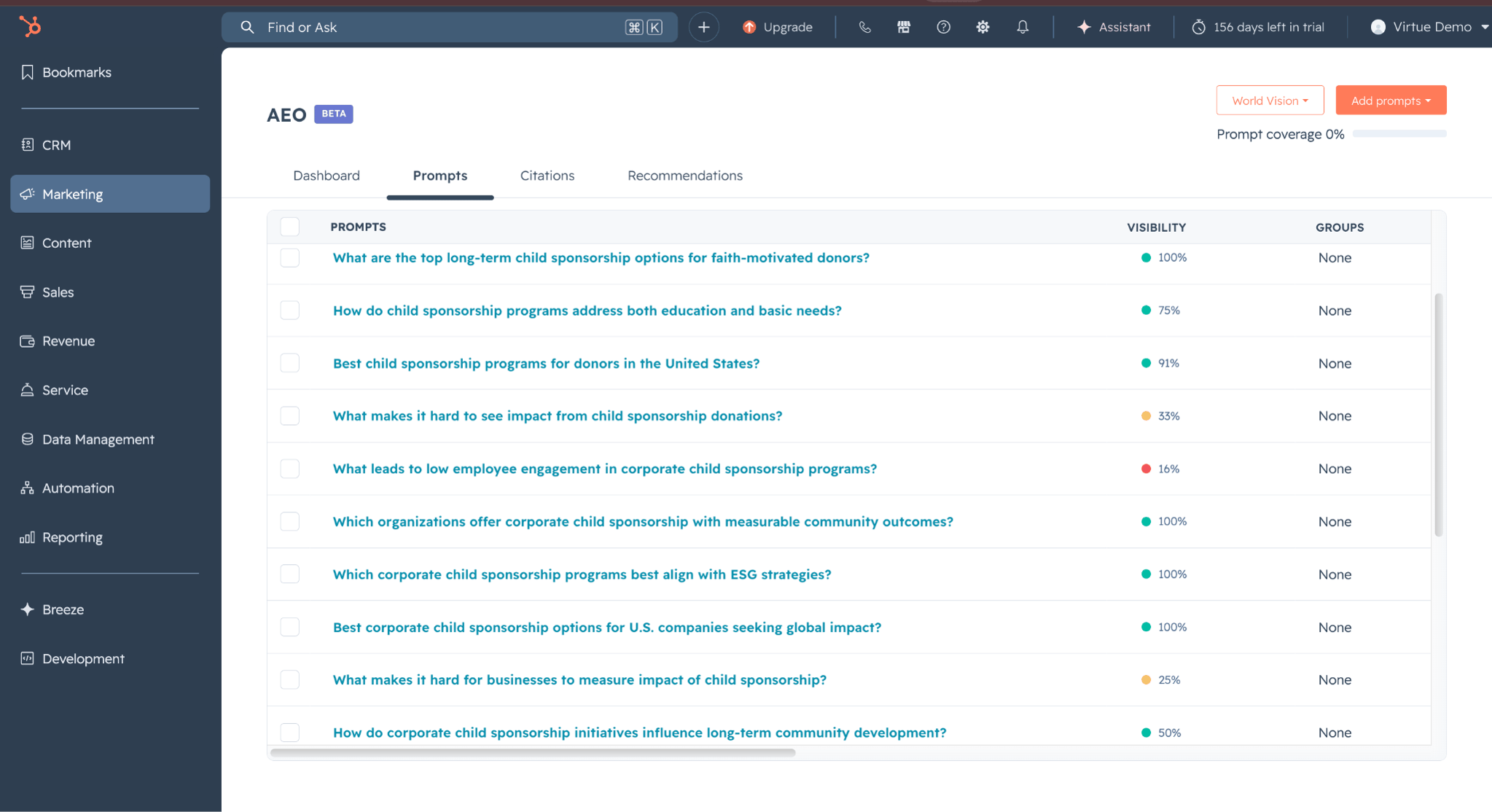
The websites describe what the organisation does — but they do not answer the questions that donors actually ask. AI engines are optimised to extract direct answers. A page that says "Talk2Me is a mental health programme for youth" will score lower than a page that opens with "If you are a young person in Hong Kong aged 14 to 24 struggling with mental health, Talk2Me offers free, confidential peer support. Here is how to access it."
The first describes a programme. The second answers a question. AI engines cite the second.
Three practical steps every HK NGO can take immediately:
- 1. Rewrite your key pages with answer-first content
Identify the five most common questions your donors, volunteers, and corporate partners ask — and make sure your website answers each one directly in the first 60 words of the relevant page. Structure matters more than length. - 2. Build a proper FAQ section
Frequently asked questions with direct, text-based answers are among the most AI-citable content formats available. If your resource library is full of PDFs, infographics, or downloadable toolkits, AI cannot read or cite them. Convert your most valuable content into text. - 3. Use consistent mission language everywhere
AI engines cross-validate across your website, LinkedIn, press coverage, and third-party directories. If you describe your mission differently on each platform, AI cannot form a confident, consistent picture of who you are. Choose your core language — your cause area, the population you serve, the geography you operate in — and use it consistently everywhere.
The Opportunity Is Now
The shift in donor behaviour is real, it is measurable, and it is accelerating. Organic search traffic to NGO websites is declining. AI-driven research is growing by orders of magnitude. The donors and CSR managers of 2026 will increasingly discover — or not discover — your organisation through AI.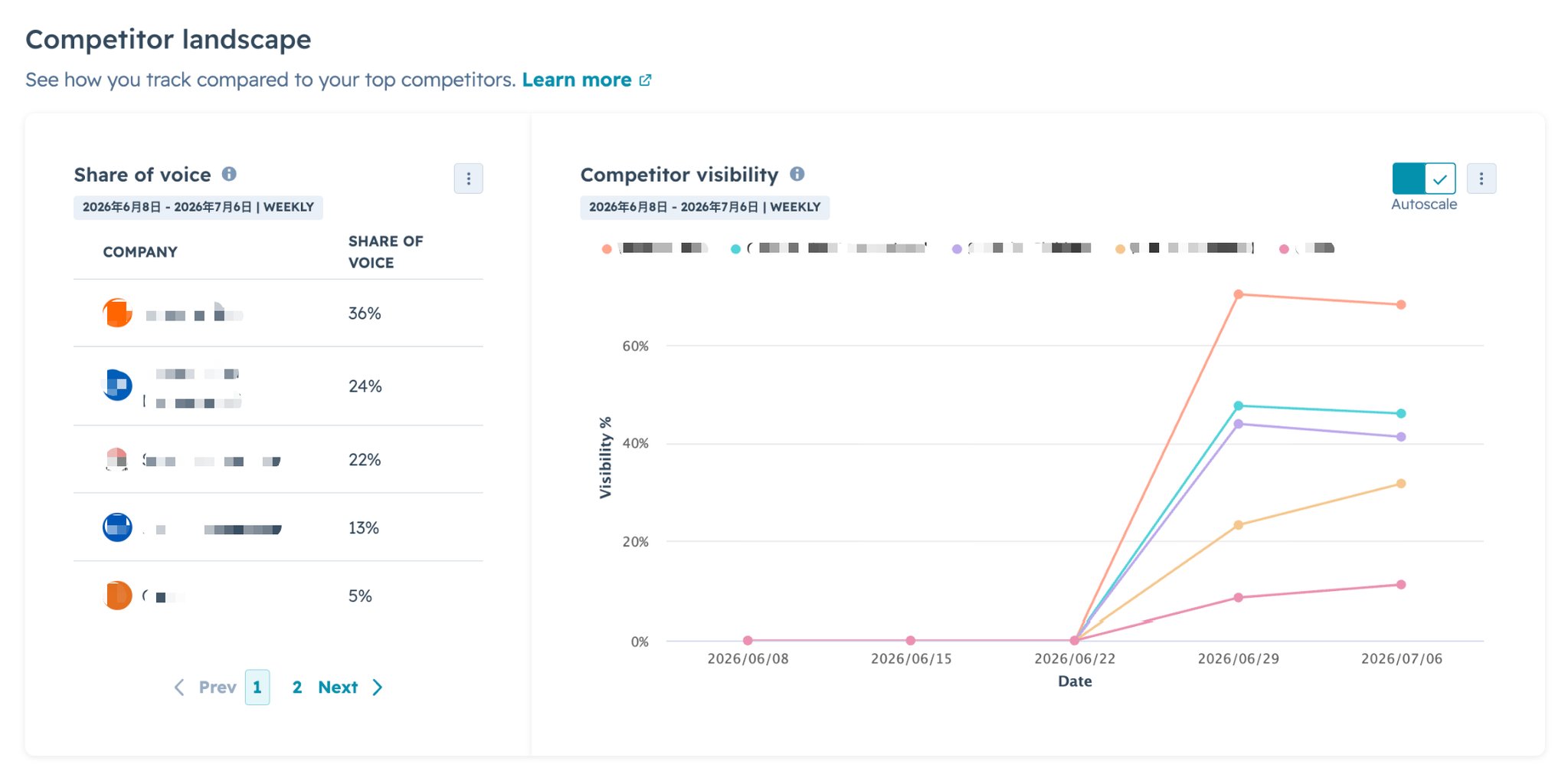
HubSpot AEO gives you the ability to measure where you stand, understand what is holding you back, and act on specific, prioritised recommendations to improve your visibility in AI-generated answers.
The organisations that move early will build AI visibility while it is still relatively uncrowded. Those that wait will find it significantly harder to close the gap.
Start by running your free AEO Grader at hubspot.com/aeo-grader. It takes three minutes and will show you exactly how Microsoft Copilot, Google Gemini, and DeepSeek describe your organisation today.
If you want to understand what your score means and what to do about it, contact our team at Virtue Media, we are happy to walk you through the results.
Virtue Media is a HubSpot Platinum Partner specialising in AI transformation for Hong Kong NGOs. We help organisations reclaim administrative capacity and strengthen donor relationships through HubSpot implementation, automation, and AEO strategy.