
A prospective family may first discover a school through an advertisement, download a prospectus, attend an open day and later submit an application. Yet inside many schools, these interactions are recorded across separate marketing platforms, admissions inboxes, spreadsheets and school management systems. Once an enquiry passes from Marketing to Admissions, Marketing often loses sight of what happens next.
This gap affects more than reporting. Without knowing whether a family has booked a visit, started an application, received an offer or decided not to proceed, Marketing cannot send communication that reflects the family’s actual needs. Generic reminders may arrive at the wrong time, while useful guidance is never sent. A shared view of the admissions journey gives both teams the context they need to communicate more personally and support each family’s next step.
What happens when information only moves in one direction?
Marketing can see which campaign, event or piece of content generated an enquiry. Admissions can see the conversations and decisions that follow. When those two views remain separate, neither team has the complete picture.
Marketing may continue promoting an open day to a family that has already visited, or send introductory information after an application has been submitted. Meanwhile, Admissions may not know which subjects, year groups or school features first attracted that family. The result is communication that feels generic or poorly timed, even when both teams are working hard.
Management also loses the ability to connect marketing activity with meaningful admissions outcomes. Enquiry numbers alone cannot show which campaigns contributed to applications, offers or enrolments.
Create one shared view without replacing the school’s core system
The solution is not to make Marketing and Admissions use identical tools for every task. It is to give both teams access to the same relationship history and a shared definition of where each prospective family is in the admissions journey.
HubSpot can provide this shared relationship layer. Marketing can retain the original enquiry source, interests and engagement history, while Admissions records follow-up activities and updates the family’s progress. Emails, meetings, calls and notes can contribute to the shared record when they are captured or logged through configured channels.
The school management or admissions system can continue to hold formal application and student records. HubSpot instead connects the activity leading up to enrolment, giving both teams the context needed to coordinate their communication.
Build a closed-loop admissions journey
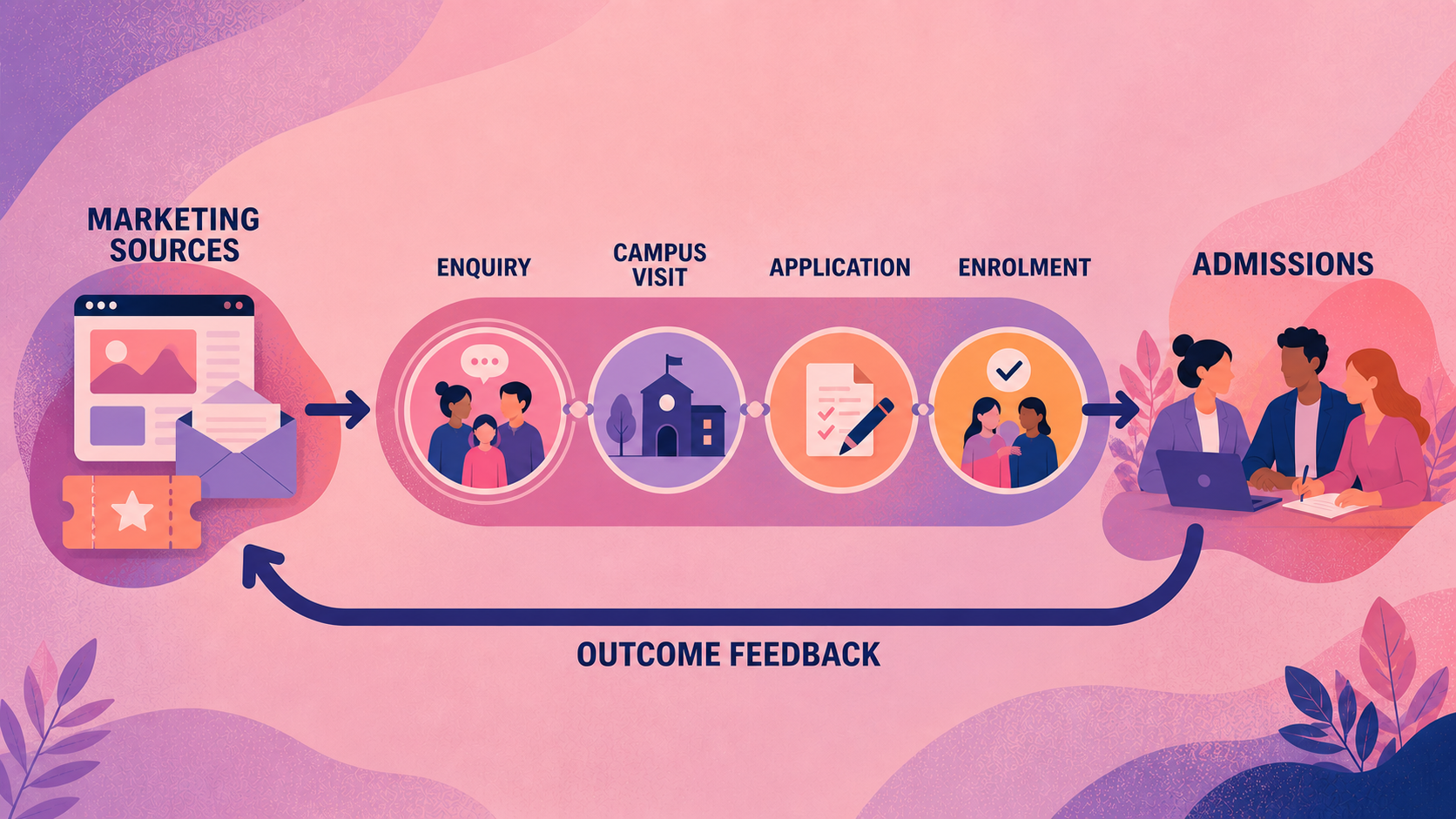
A shared process begins with agreed stages. A school might track each prospective family from enquiry and first contact through campus visit, application, offer, enrolment or withdrawal. Each stage should have a clear meaning, an owner and a small set of required information.
Marketing supplies the context at the beginning: where the enquiry came from, which programme or year group interests the family, and what content or events they have engaged with. Admissions then updates the record as conversations, visits and applications progress.
This creates a two-way flow. Marketing does not simply pass a name to Admissions and lose visibility. Admissions returns meaningful progress information, allowing both teams—and school leadership—to see where families are moving forward, becoming inactive or leaving the journey.
Turn admissions insight into more relevant communication
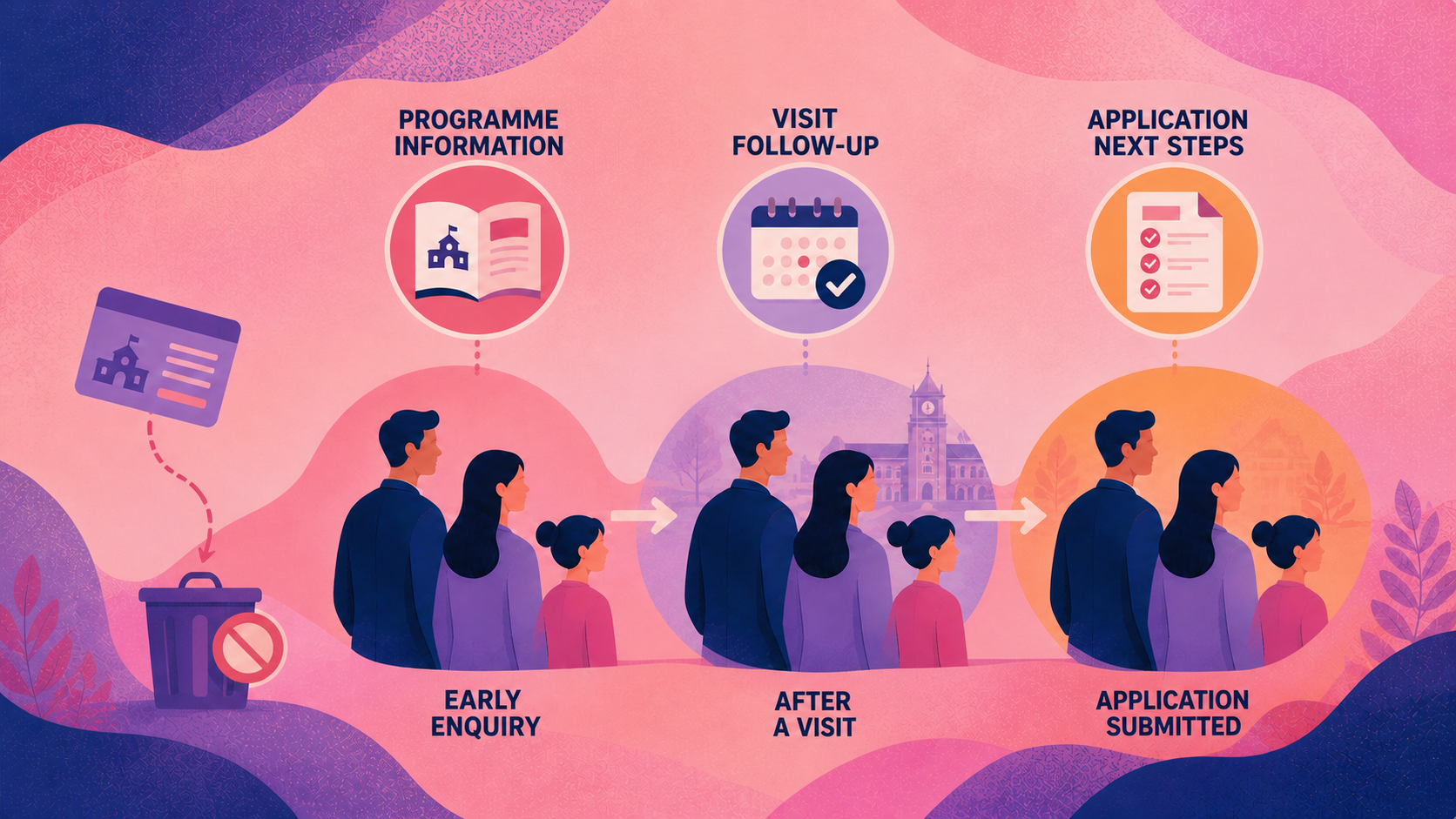
When Marketing can see the admissions stage, personalisation can go beyond adding a parent’s name to an email. Families who have made an initial enquiry might receive information about relevant programmes or upcoming visits. Those who have attended an open day could receive answers to common application questions, while applicants may benefit from timely guidance on documents and next steps.
Stage information also helps Marketing know when not to send something. A family that has already applied should not continue receiving introductory messages, and an enrolled family should move into an appropriate welcome journey. Communication must still respect consent and subscription preferences, but better context allows each message to support the family’s next decision instead of repeating information they no longer need.
This makes Marketing more useful to Admissions. Rather than generating enquiries and stepping away, the team can help maintain engagement throughout the decision process and give more prospective families the support they need to progress.
Give school leadership a clearer view of performance
A shared journey gives management more useful questions to ask. Instead of looking only at enquiry totals, leaders can examine how many families move from enquiry to visit, application, offer and enrolment—and where progress begins to slow.
When original marketing sources and later admissions outcomes are captured consistently, reporting can also show which campaigns, events and content are associated with meaningful progress. This does not make every enrolment attributable to a single marketing activity, but it gives the school a stronger evidence base for planning budgets, improving campaigns and identifying weaknesses in the admissions experience.
Start with shared definitions, not more software
Before configuring HubSpot, Marketing and Admissions should agree on the stages of the admissions journey, who owns each stage, what information must be recorded and when a record should be updated. Beginning with one programme, year group or intake can help the school test the process before extending it more widely.
HubSpot can then be configured around this agreed workflow, using shared records, an admissions pipeline, reporting and—where the selected subscription supports it—automated reminders or communications. The value comes from consistent team use, not from software alone.
If your school wants to connect Marketing and Admissions around one prospective-family journey, book a HubSpot consultation with Virtue Media. We can help you map the handover process, define the information each team needs and identify a practical starting point.